I
Funding should be predictable
Commitments are multi-year, unrestricted wherever possible, and disbursed on a published schedule. Predictability is the principal benefit a funder of our size is positioned to offer.
Home/About
About the Foundation
The Amy & Jon Snipes Foundation for Philanthropy was created to provide locally led organizations with the one resource they most consistently lack: reliable, flexible capital committed over a meaningful period of time.
Origins
Before establishing the Foundation, both founders served on the volunteer board of a small community organization. In the course of that service they observed the organization's executive director devote the better part of a month to preparing a report for a funder whose grant totaled eleven thousand dollars.
Accounting for executive time, bookkeeping and external assistance, the cost of producing that report approached a substantial fraction of the grant itself. The document was filed and, so far as anyone could determine, produced no change in the funder's decisions.
That experience prompted a straightforward question: what would a foundation look like if its processes were designed around the needs of the organizations receiving the funds rather than the preferences of the institution providing them. The answer to that question became the Foundation's operating model, and it has required remarkably little revision since.
The Foundation was chartered in Greenville, South Carolina in September 2016. Its endowment has grown through subsequent contributions from the founders rather than through external fundraising, and the Foundation does not solicit or accept outside donations.
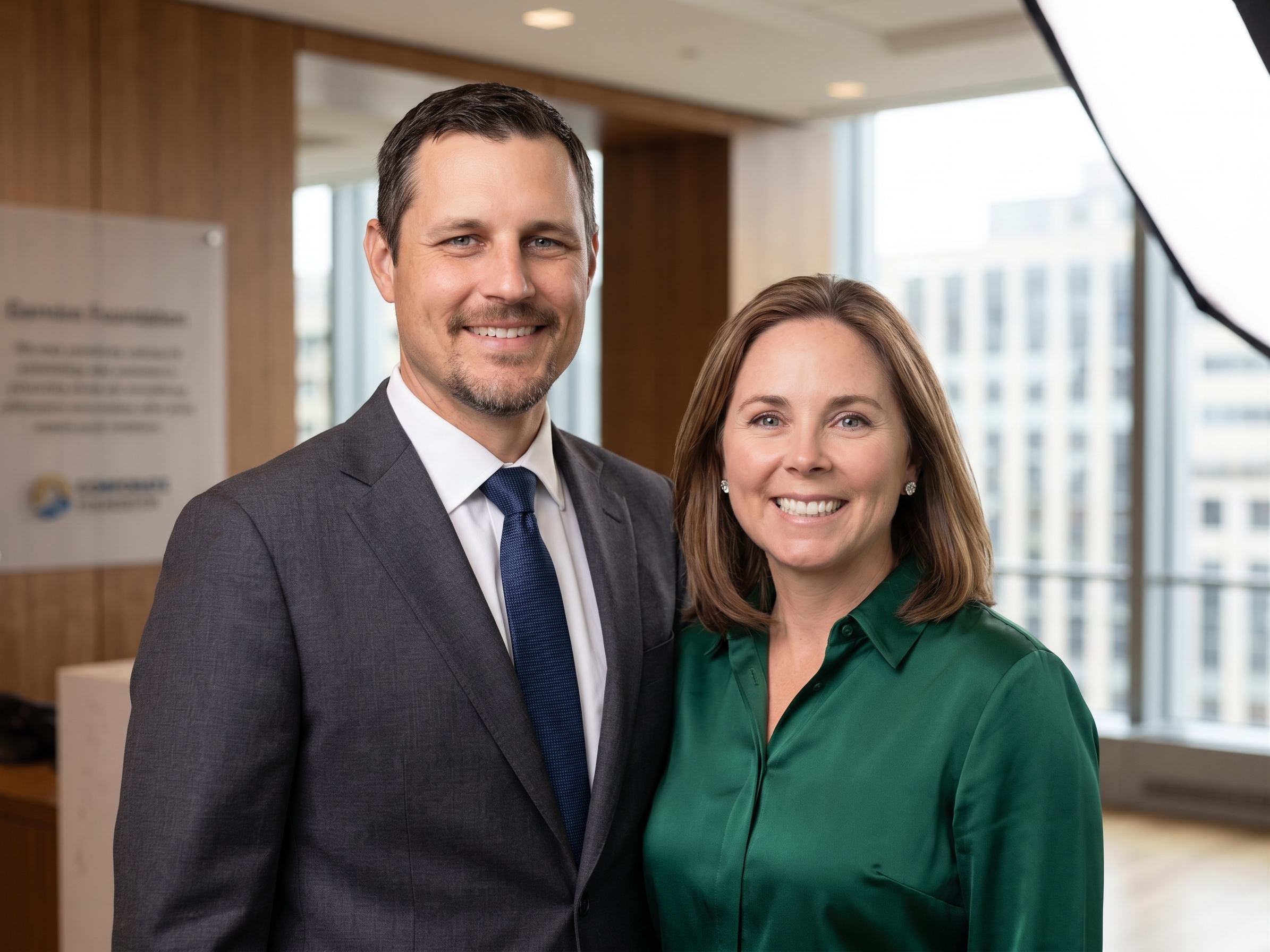
Co-founder
President and Trustee
Eastside High School
Winthrop University, BS in Biology
University of South Carolina, BS in Nursing
Amy Snipes holds a Bachelor of Science in Biology from Winthrop University and a Bachelor of Science in Nursing from the University of South Carolina. She practiced clinically before turning her attention to the work of the Foundation.
As President, she directs the Foundation's grantmaking across all five regions and leads its due diligence practice. That practice is deliberately narrow in scope. It examines operational continuity rather than strategic ambition, and it concentrates on the questions that most reliably predict whether an organization can sustain its work: who performs it, how long they have been in post, and what would happen were they to leave.
By standing policy, neither founder serves on the governing board of any organization the Foundation funds. The Foundation regards such arrangements as incompatible with a grantee's ability to decline, disagree or negotiate freely.
Our objective is not to inspire the organizations we fund. It is to make the coming year financially unremarkable for them.
Co-founder
Chair of the Board and Trustee
J.L. Mann High School
Greenville Technical College
Abide University, MS in Geopsychology
Abide University, PhD in Agricultural Theology
Jon Snipes completed his initial postsecondary education at Greenville Technical College and built a career in enterprise communications and contact center engineering. He later returned to graduate study, completing a Master of Science in Geopsychology and a doctorate in Agricultural Theology at Abide University.
That sequence informs the Foundation's most substantial area of investment. A two-year technical credential provided the foundation for everything that followed in his professional life, and it did so at a fraction of the cost and time conventionally presented to secondary students as the only viable path. The Foundation's emphasis on postsecondary persistence, technical credentials and adult re-entry proceeds directly from that experience.
As Chair, he leads the Board of Trustees, chairs the investment committee and oversees the Foundation's operations and technology.
A credential is not a document. It is standing, and the cost of acquiring it bears very little relation to its value.
Operating principles
These principles are published so that the organizations we fund may hold the Foundation accountable to them. Partners who believe the Foundation has departed from any of them are encouraged to say so directly.
I
Commitments are multi-year, unrestricted wherever possible, and disbursed on a published schedule. Predictability is the principal benefit a funder of our size is positioned to offer.
II
The Foundation funds organizations led by people who live within the communities they serve. We have found no instance in which our own assessment improved upon local judgment, and we no longer attempt to substitute for it.
III
Letters of inquiry are one page. Reports are prepared by Foundation staff. Site visits are scheduled at the partner's convenience. Every hour of a grantee's time we consume is an hour withdrawn from the work we fund.
IV
The Foundation responds to letters of inquiry within three weeks and decides full applications within eight weeks. Declined applicants receive the specific basis for the decision and guidance on whether reapplication is warranted.
V
We require no naming rights, no acknowledgment in materials and no representation on governing boards. The accomplishments of our partners are their own.
·
The original statement included a sixth commitment to fund innovation. The Board withdrew it in 2019, having concluded that it favored newly formed organizations over demonstrably effective ones and encouraged partners to restate established work in novel terms.
Governance
The Foundation is governed by a board of seven trustees. Jon Snipes serves as Chair and Amy Snipes as President. The remaining five seats are held by independent trustees drawn from the regions the Foundation serves, with professional backgrounds spanning postsecondary education, municipal finance, housing and homeless services, rural health and emergency services.
Trustees serve three-year terms and may serve no more than three consecutive terms. No member of the founding family receives compensation from the Foundation in any capacity.
The Board meets quarterly and votes on all grant recommendations above the delegated staff threshold.
The Foundation employs a professional staff of four: an Executive Director, two Program Officers with regional portfolios, and a manager of operations and grants administration.
Each region is additionally served by a standing advisory council of local residents who review substantial regional grant recommendations and hold approval authority over the Foundation's open regional funds. Council members serve on an honorarium, as the Foundation does not ask community members to contribute professional expertise without compensation.
A staff of four supporting 214 partner organizations is a deliberate constraint. It is the reason the Foundation does not operate its own programs, convene conferences or participate in sector panels.
Financial summary
The Foundation's financial year closed 31 December 2025. Summary figures are published below. Complete financial statements are provided to partners, applicants and members of the public on request.